
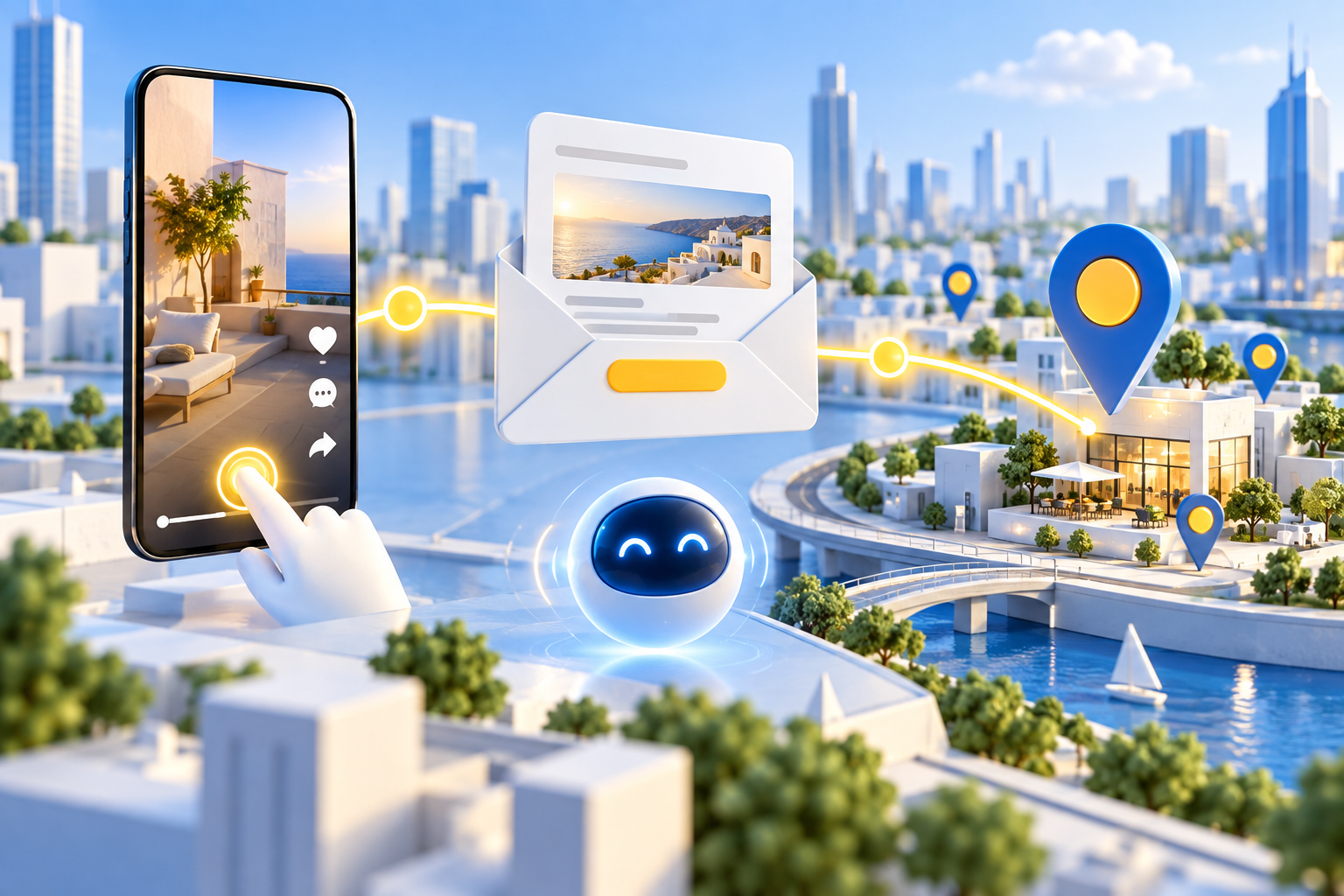
Google's September Demand Gen update is designed to shorten the distance between seeing an ad and doing something about it. The company is combining conversational AI, fewer taps, and local map placement across YouTube, Gmail, and Maps.
YouTube ads can come with a Business Agent
Google says viewers can engage with a conversational Business Agent alongside eligible video ads that use product feeds. Instead of leaving the video to search for basic details, someone can ask about the product or brand in the same viewing context.
For advertisers, the opportunity is richer product discovery. For viewers, the value depends on transparency and accuracy: an agent attached to an advertisement should be understood as a sales channel, even when its answers feel conversational.
One tap replaces an extra step
Full-screen vertical image ads on YouTube Shorts can now lead directly to a landing page with one tap. Gmail image ads get a similarly simplified journey. Google says advertisers that added Gmail to Demand Gen saw a 40 percent average increase in conversions at the same return on investment, based on its own global internal data from February 2026.
That figure is not a promise for every campaign. Creative quality, targeting, the landing page, and the product itself still decide whether removing a tap produces a useful visit.
Promoted pins reach Maps
Affiliate Location Extensions let retail networks and dealerships show promoted locations as people browse, search, or navigate in Google Maps. It connects a national campaign to a nearby place where the product can actually be found.
The practical takeaway
Google is treating the ad less like a static poster and more like a guided route: discover in video, ask a question, tap once, or find a nearby location. Businesses should test each new path separately and measure completed outcomes, not just cheaper clicks.